
Culture of Death Creates Moral Confusion Surrounding Clancy Trial
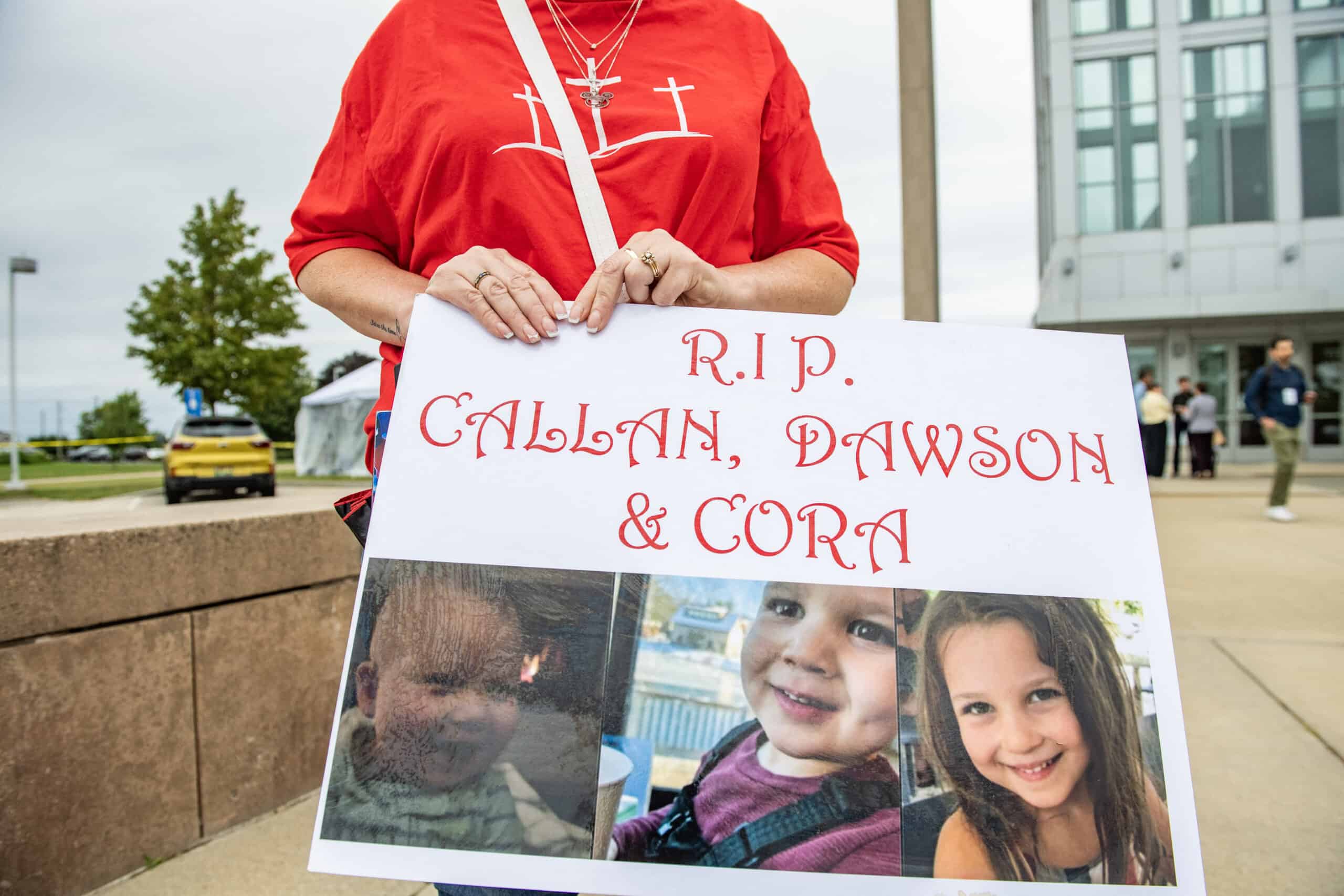
When it comes to the trial of Lindsay Clancy, the Massachusetts labor and delivery nurse currently facing three counts of first-degree murder for the death of her three children, there is no dispute over the primary tragic facts of the case.
On January 24, 2023, Clancy strangled her three children with an exercise band. Cora, age 5, and Dawson, age 3, died that day. Callan, 8 months, died three days later.
While Clancy has never formally confessed to the murders (she pleaded “not guilty”), neither she nor her defense attorneys have ever disputed that she did it. When her husband, Patrick, called 911, he told the dispatcher, “She killed the kids.”
Instead, Clancy’s attorneys have argued that she was mentally ill, suffering from postpartum depression and psychosis, and therefore incapable of understanding that she was killing her three children.
As of Tuesday morning, the 12-member jury was in its fourth day of deliberations and reported back to the judge that it had been unable to come to a unanimous decision. The jury could find Clancy guilty of first-degree murder, second-degree murder, manslaughter or not guilty by reason of lack of criminal responsibility.
Informed of the deadlock, Judge William Sullivan told the jury to keep deliberating. One woman juror reportedly shook her head in a sign of apparent exasperation.
An individual can be mentally ill and still criminally responsible. But Judge William Sullivan, who charged the jury, instructed the 12, “A person is not criminally responsible for her conduct if she has a mental disease or defect. And as a result of that mental disease or defect, she lacks the substantial capacity either to appreciate the criminality or wrongfulness of her conduct or to conform her conduct to the requirements of the law.”
The prosecution in the case alleges that Lindsay Clancy had the capacity to know what she was doing and planned the murders by arranging for her husband to run errands – during which time she killed the three children. The prosecution also alleges she killed the oldest first because she was most likely to resist. She then also attempted suicide by cutting her wrists and neck and jumping out of a second-story window.
Beyond the heartbreaking details of this horrific story lies an additional and disturbing development – a gathering, grassroots contingent of supporters who are sympathetic and perhaps even willing to forgive Clancy due to her reported post-partum depression.
In a piece published yesterday in The Atlantic titled, “The Women Obsessed With Lindsay Clancy,” we meet several of them.
Dottie Kiley told the reporter that she could relate to Clancy. “I had suicidal thoughts, clear as a bell,” she said. “So bad I called the police and told them, and they had a cop come down and sit with me. It was a small town, and they had time to do that.”
Women like Kiley have been traveling great distances to witness the trial in person.
NBC reported on Monday that Clancy had received enough letters from supporters to fill three boxes. Her attorney, Kevin Reddington, told reporters, “She knows that there are people out there that have not judged her and know that she is a wonderful, wonderful person.”
Where does such moral confusion and poor discernment stem from?
Post-partum depression is real, and mental illness is devastating, but how does one jump from recognizing those two truths to expressing admiration or even moral support for a woman who murdered her three children?
Moral confusion doesn’t usually develop suddenly but incrementally. It begins when we blur distinctions that are crystal clear, especially between matters of life and death. A culture that refuses to recognize the sanctity of life will inevitably excuse away or struggle to respond with moral clarity when that life is violated, diminished and destroyed.
In the United States, more than 60 million innocent children have been killed inside the womb since the Supreme Court legalized abortion in all fifty states back in 1973. Roe’s reversal has helped partially right the wrong in some states, but in Massachusetts, where the Clancy trial is being held, a so-called “right” to abortion was recently expanded.
Back in August, Gov. Maura Healey signed a deceptively named wicked bill, “An Act Prioritizing Patient Access to Care,” into law that permits abortion up to the moment of birth.
What does this have to do with the Clancy murders?
If killing a fully formed baby inside the womb doesn’t elicit moral outrage, is it any shock that some might morally excuse the act of killing a baby outside the womb just eight months later?
Wrote journalist and author Caitlin Flanagan in The Free Press, “What began as admirable compassion for a woman who says she was driven by mental illness to commit the world’s greatest form of evil has turned into something strange: an almost exultant, fan-like celebration of Lindsay Clancy.”
Indeed. And it is awful and horrifically reckless and dangerous.
Moral confusion is a sin and sickness with devastating consequences. When you rationalize away immorality regarding one evil act (abortion), it can become easier and more likely to somehow excuse it in another. The failure to distinguish between what is evil and what is good is what drives and multiplies cultural confusion, dysfunction, and devastation. It’s also what contributes to some people ignoring the deaths of three beautiful children and then writing letters of support to the woman who killed them.
Please join us in praying for justice in the Lindsay Clancy trial.


ABOUT THE AUTHOR